

Mold spots on wood can look small at first, then quickly make you wonder if the wood is still safe to keep.
So the main question is: how to clean mold off wood without leaving moisture or damage behind?
The truth is, wiping the surface is only part of the fix.
Wood needs proper cleaning, full drying, and the moisture source handled, or mold can return.
In this guide, you’ll learn what to use, how to clean mold from wood step by step, how to handle stains or smell, and when damaged wood may need replacing.
Key Takeaways
- Mold on wood can often be cleaned when it is still on the surface, and the wood feels solid.
- Cleaning alone is not enough. The wood must dry fully, or mold can come back.
- Start with mild detergent, water, a soft brush, and good airflow for most wood mold cleanup.
- Bleach is not the default fix for wood because wood is porous, and mold may sit deeper than the surface.
- Black, white, and green mold use the same basic cleaning process. Focus more on moisture, wood condition, and depth than color.
- Soft, swollen, warped, or crumbly wood may need more than cleaning, especially if stains, smell, or moisture keep returning.
Can You Clean Mold Off Wood?
Yes, in many cases, you can clean mold off wood.
That is usually true when the mold is still on the surface, and the wood is still solid.
But not every piece of wood can be saved.
If the wood feels soft, crumbly, warped, or badly damaged, the mold may have gone deeper than a simple surface cleanup. EPA notes that porous materials can be harder to fully clean if mold has grown into them.
So the real answer is:
- Yes, you can often remove mold from wood
- No, not always if the damage is deep
- And yes, the moisture problem has to be fixed too or the mold can come back
That last part matters most.
Cleaning the visible mold is only half the job. EPA and CDC both stress that mold cleanup needs to be followed by thorough drying and moisture control.
What to Use to Clean Mold Off Wood
For most wood mold cleanup, start simple.
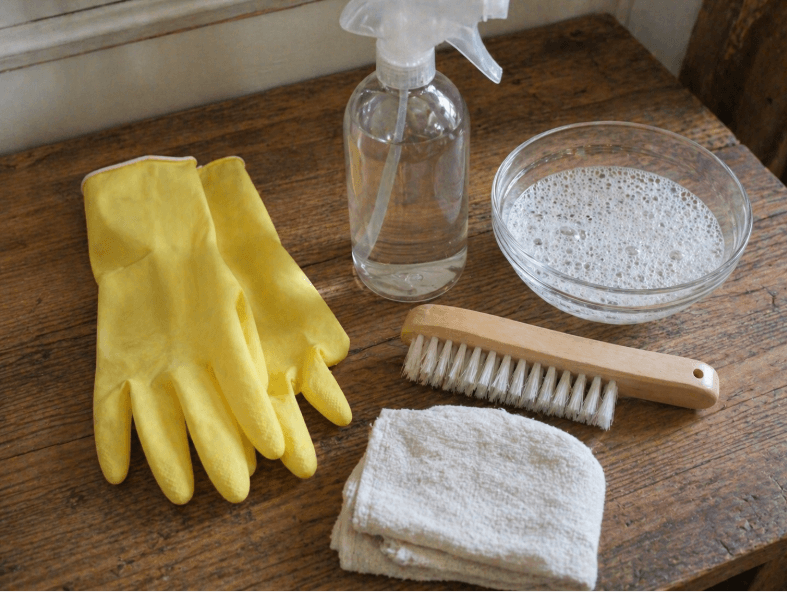
You usually need:
- Water
- Mild detergent or dish soap
- Soft brush or cloth
- Protective gloves
- Dry towel or absorbent cloth
- Good airflow
Use detergent and water to clean the visible mold, then dry the wood completely. This is the safest starting point for most surface mold on wood.
Avoid jumping straight to harsh chemicals. If the mold keeps coming back, the real problem is usually moisture, not the cleaner.
Simple rule: clean the mold, dry the wood, and fix the damp area so it does not return.
Does Bleach or Vinegar Kill Mold on Wood?
Bleach is not the routine go-to for mold cleanup. EPA says bleach is not recommended as a regular practice for cleaning mold, even though CDC notes it can be used in some situations.
With wood, the bigger issue is that it is porous, so killing mold is not the same as fully removing it. If you want to clean mold off wood without bleach, detergent and water is the safer basic approach.
How to Clean Mold Off Wood
If you want to clean mold off wood, the job is pretty simple on paper:
- clean the visible mold
- dry the wood completely
- fix the moisture problem
That is the full process.
If you skip the drying part or ignore the moisture source, the mold can come back even if the wood looks better for now. EPA and CDC both stress cleaning visible mold and drying the material fully afterward.
A simple step-by-step way to do it:
- Wear gloves and protect yourself.
You do not want to handle mold with bare hands. - Improve airflow in the area.
Open windows if you can, or use ventilation so the wood can dry faster. - Use detergent and water to scrub the surface.
A soft brush or cloth is usually enough for surface mold. - Wipe away the loosened mold.
Keep going until the visible growth is removed. - Dry the wood completely.
This part matters just as much as cleaning. - Fix the moisture source.
If the leak, humidity, or damp condition stays, the mold can come back.
That is really the best answer to how to remove mold from wood, how to get rid of mold on wood, or how to clean wood that has mold on it.
It is not about using the strongest product.
It is about cleaning, drying, and stopping the moisture problem that caused it.
How to Remove Black, White, or Green Mold From Wood
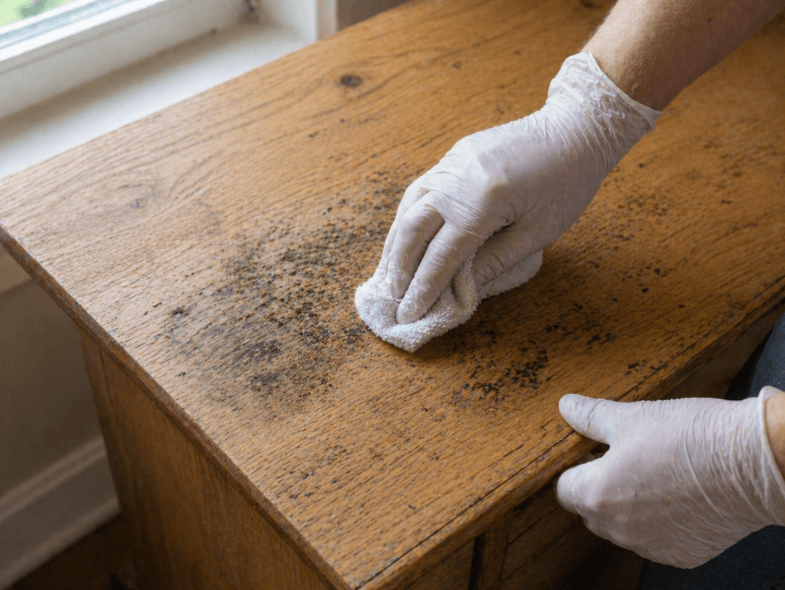
Black, white, and green mold can look different, but the cleaning approach is usually the same.
The most important thing is not the color first. It is whether the mold is on the surface, whether the wood is still solid, and whether the area is still damp.
Use this simple approach:
- Clean the visible mold with mild detergent and water.
- Scrub gently with a soft brush or cloth.
- Wipe away residue with a clean, damp cloth.
- Dry the wood fully so moisture does not stay trapped.
- Fix the moisture source if the area keeps getting damp.
Be more careful if the mold keeps spreading, the wood feels soft, or the affected area is large. That may mean the problem has gone deeper than surface cleaning can fix.
Simple rule: don’t focus only on the mold color. Focus on how deep it is, how solid the wood feels, and why the area got damp.
📖 You May Also Like This “Cleaning” Article: How to Remove Burnt Popcorn Smell From a Microwave?
How to Remove Mold Stains or Smell From Wood
Getting the mold off the wood and getting rid of the stain or smell are not always the same thing.
That is where people get frustrated.
You clean the surface, but the wood still looks marked or smells musty.
That usually means one of two things:
- the mold stained the wood
- moisture is still trapped in or around it
EPA and CDC both stress that drying matters just as much as cleaning, because moisture is what keeps mold problems going.
To deal with mold stains or smell on wood:
- Clean the visible mold first
- Dry the wood completely
- Check if the smell improves once the wood is fully dry
- Clean again if any residue is still there
- Fix the moisture source so the smell does not come back
A musty smell usually means the wood stayed damp too long.
And a stain may stay even after the mold is gone, especially on more porous wood. EPA notes that porous materials can be harder to fully clean if mold has grown deeper into them.
So the practical answer is:
- remove the mold first
- dry the wood fully
- then judge the leftover stain or smell
If you try to solve the smell without solving the dampness, the problem usually comes back.
How to Clean Mold Off Wood Furniture or Cabinets
Mold on wood furniture or cabinets often comes back because moisture stays trapped in hidden spots.
Don’t just wipe the front surface. Check corners, backs, undersides, shelves, cabinet interiors, and areas near leaks or poor airflow.
Use this simple process:
- Empty the cabinet or clear the furniture first
- Clean visible mold with mild detergent and water
- Wipe hidden corners and edges
- Dry the wood completely
- Check for leaks, condensation, or trapped humidity
- Keep air moving until the area is fully dry
If the wood feels soft, swollen, warped, or crumbly, cleaning may not be enough. The mold may have gone deeper into the wood.
Simple rule: clean the visible mold, but check the hidden damp spots too. That is usually what decides whether mold stays gone.
How to Clean Mold Off Wood Floors, Decks, or Ceilings
The cleaning method is mostly the same here, but the location changes the real problem.
With wood floors, the concern is usually trapped moisture underneath.
With decks, it is outdoor moisture and buildup.
With ceilings, it is often a leak above the surface.
So yes, you can clean mold off wood floors, decks, or ceilings, but you also need to figure out why that area stayed damp in the first place. EPA and CDC both stress that mold cleanup only works long term when the moisture problem is fixed too.
The practical approach is:
- clean the visible mold with detergent and water
- wipe or scrub gently
- dry the surface fully
- inspect the area for leaks, trapped moisture, or poor airflow
If the wood floor feels soft, the deck boards are badly damaged, or the ceiling stain keeps growing, surface cleaning may not be enough. EPA notes that porous materials can be difficult to fully clean if mold has grown deeper into them.
You May Also Like This “Cleaning” Article: How to Get Mold Out of Clothes Step by Step
How to Clean Mold Off Wood Windows, Frames, or Sills
Mold on wood windows, frames, or sills is often a moisture problem caused by condensation, leaks, or poor airflow.
That is why it keeps showing up in the same spots.
The visible mold can usually be cleaned with detergent and water, but if the frame or sill stays damp, the problem often comes back. CDC recommends controlling indoor moisture and humidity, and EPA says mold control is really moisture control.
A simple way to handle it:
- clean the visible mold
- dry the frame or sill completely
- check for window leaks or condensation
- improve airflow if the area stays damp
If the wood around the window is swollen, soft, or badly stained, the mold may be deeper than it looks.
How to Clean Mold Off Painted, Unfinished, or Teak Wood
The cleaning method is similar, but the wood surface changes how careful you need to be.
- Painted wood: Scrub gently so you don’t peel or damage the finish.
- Unfinished wood: Be careful because it can absorb moisture and mold more deeply.
- Teak wood: Clean the visible mold, dry it fully, and check why the wood stayed damp.
Use mild detergent and water, a soft brush or cloth, and dry the wood completely after cleaning.
If mold keeps coming back or the wood feels soft, swollen, or damaged, the issue may be deeper than surface cleaning.
Simple rule: match the cleaning pressure to the wood surface, then dry it fully so mold has less chance to return.
How to Clean Mold Off a Wood Cutting Board
A moldy wood cutting board needs extra caution because it is a food-contact surface.
If the mold is light and only on the surface, you may be able to clean it.
But if the board smells bad, feels rough or cracked, or looks like the mold has gone deeper into the wood, replacing it is usually the safer choice.
For a light surface issue, the basic process is:
- scrub the area well
- rinse it
- dry the board completely
- make sure it does not stay damp afterward
The big thing here is not just removing what you can see.
It is making sure the board is still safe to use.
Frequently Asked Questions
How to Remove Mold From Wood in a Crawl Space
Clean the visible mold, dry the wood fully, and fix the crawl space moisture problem. If dampness stays, mold usually comes back no matter how well you clean it.
Can You Pressure Wash Mold Off Wood?
You can, but it is not always the best choice. Pressure washing may spread moisture deeper into wood, which can make mold problems worse if drying is slow.