

You wake up with itchy bites, check your sheets, and start wondering: Are bed bugs hiding in my mattress?
That’s usually when the panic starts.
The problem is, bed bugs don’t just sit on top of the mattress where you can easily see them. They hide in seams, edges, tags, folds, bed frames, headboards, and nearby cracks. So a quick vacuum or one-time spray often feels like it worked, then the bites come back.
That’s the challenge.
You’re not only trying to remove the bugs you see. You’re trying to stop the ones hiding nearby, kill the eggs, and break the repeat cycle.
The fix is a full process: inspect, vacuum, wash, heat, steam, encase, treat nearby areas, and repeat.
In this guide, you’ll learn how to get rid of bed bugs in a mattress, what actually works, what mistakes make things worse, and how to stop them from coming back.
Key Takeaways
- Bed bugs hide in tight spots, especially mattress seams, folds, tags, bed frames, and headboards
- Bites alone don’t prove bed bugs, but bites plus stains, dark spots, eggs, or shed skins are stronger signs
- Vacuuming helps, but it will not remove every bug or egg by itself
- High heat is one of the most useful tools, especially for bedding, clothes, and washable fabrics
- Steam helps reach seams and edges, where normal cleaning misses hidden bugs
- A mattress encasement helps trap survivors, but it must stay sealed long enough to work
- Foggers and bug bombs are not enough, because they often do not reach cracks and hiding spots
- You usually do not need to throw away the mattress if the infestation is caught early and treated properly
- One treatment is rarely enough, because eggs and hidden bugs can restart the problem
- Call a professional if live bugs, bites, or spreading activity continue after repeated treatment
Signs Bed Bugs Are Already in Your Mattress
If you’re waking up with bites or seeing tiny stains on your sheets, your mattress is the first place to check.
But don’t rely on one sign alone.
Bed bug bites can look like other bites or skin irritation. The stronger clue is when bites show up with mattress stains, dark dots, shed skins, eggs, or live bugs. EPA lists rusty stains, dark spots, tiny eggs or eggshells, shed skins, and live bed bugs as common signs to check for.
Clear Signs on the Mattress Surface
- Check the seams first: Look along mattress edges, piping, tags, corners, and stitching. Watch for dark dots, rusty stains, tiny pale eggs, shed skins, or live bugs. Bed bugs like tight protected spaces, so slow inspection matters more than a quick glance.
Signs on Your Body and Bedding
- Look for repeated patterns: Bites may show up after sleeping, often on exposed areas like arms, neck, shoulders, or legs. Also check for small blood spots on sheets or pillowcases. CDC notes that bed bugs are often found in mattress and sheet folds, with rusty-colored spots and shed skins nearby.
📖 You May Also Like This “Pest Control” Article: How Are Bees Getting in My House? (6 Common Entry Points)
Why Bed Bugs Keep Coming Back
This is the part that makes bed bugs so frustrating.
You clean the mattress, maybe spray something, and things seem better for a few days. Then bites show up again.
That usually happens because the mattress was only one part of the problem.
Bed bugs can hide in:
- Bed frames and headboards: These are close to where you sleep, so they are common hiding spots
- Box springs: Fabric folds and wooden gaps give bed bugs protected areas
- Baseboards and cracks: Small gaps near the bed can hide bugs during the day
- Nearby furniture: Nightstands, couches, chairs, and drawers can hold hidden activity
- Bedding and laundry piles: Fabric gives them places to move and hide
Example: You vacuum the mattress and wash the sheets, but the headboard still has hidden bugs. A few nights later, they return to the mattress area, and it feels like the treatment failed.
Simple rule: bed bug treatment fails when you clean the mattress but ignore the area around it.
How to Get Rid of Bed Bugs in a Mattress
The goal is not to do one huge cleaning session and hope for the best. The goal is to work in order, so you remove visible bugs, treat hidden spots, kill eggs where possible, and stop survivors from escaping.
Step 1: Vacuum the Mattress Slowly
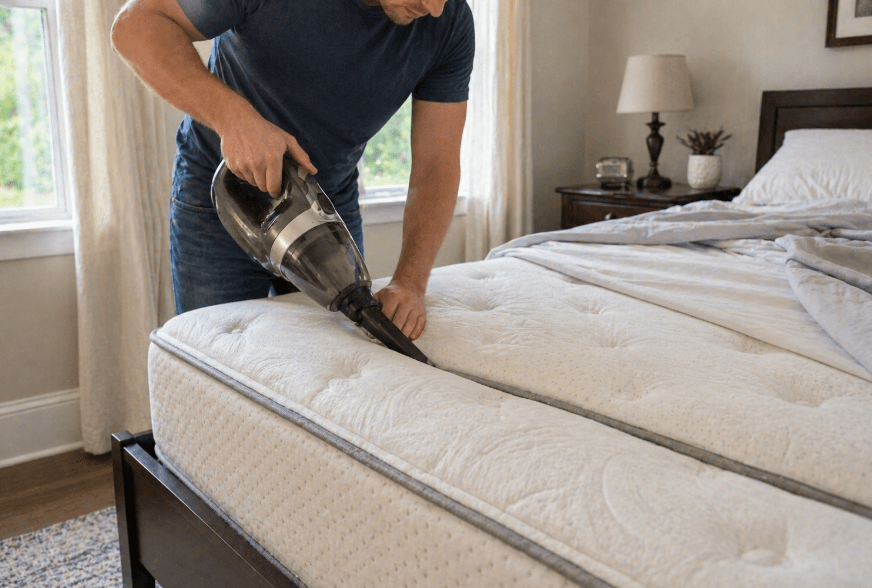
- Use a crevice tool: Vacuum the mattress surface, seams, edges, folds, corners, and tags. Move slowly so the suction has time to pull bugs from tight areas. After vacuuming, empty the canister or seal the bag outside so bugs do not spread back into the room.
Step 2: Wash and Dry Bedding on High Heat
- Heat washable items: Remove sheets, pillowcases, blankets, mattress covers, and washable fabrics near the bed. EPA recommends using a household dryer on high heat for 30 minutes for items that can handle it, because washing alone may not do the job.
Step 3: Use Steam on Mattress Seams
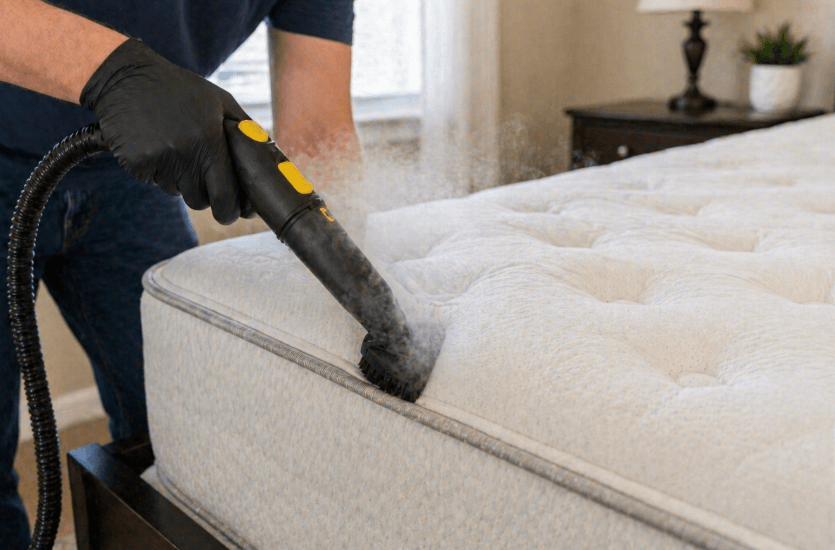
- Move slowly with steam: Steam the seams, edges, corners, and folds of the mattress. Do not rush. The heat needs time to reach the hiding spots. Steam is useful because it can reach areas where vacuuming does not pull out every bug or egg.
Step 4: Put on a Bed Bug Mattress Encasement
- Seal the mattress fully: Once the mattress is cleaned and dry, use a bed bug-proof encasement. EPA recommends encasements for mattresses and box springs because they reduce hiding spots and make bed bugs easier to see. Some guidance says to leave encasements on for a year.
Step 5: Treat the Bed Frame and Nearby Cracks
- Go beyond the mattress: Check the bed frame, headboard, box spring, baseboards, nightstands, and cracks near the bed. Vacuum and steam where safe. If you use any product, only use one labeled for bed bugs and follow the label exactly.
Simple rule: clean the mattress, then clean everything touching or near the mattress.
Heat Treatment Is One of the Fastest Ways to Kill Bed Bugs
Heat works because bed bugs and eggs cannot survive high enough temperatures for long enough. That’s why dryers, steam, and professional heat treatments are so common in bed bug control.
The challenge is that heat must actually reach the bugs. Warm air in the room is not enough. A hot surface outside the mattress does not always mean heat reaches deep seams, fabric folds, or cracks.
Useful heat methods include:
- High-heat dryer: Best for sheets, pillowcases, clothes, blankets, and washable fabric items
- Steam cleaner: Good for seams, edges, folds, bed frames, and cracks where moisture is safe
- Professional heat treatment: Used for heavier infestations or wider room activity
University of Minnesota Extension notes that pest control heat treatments may use 118°F maintained for at least 70 minutes, while laundering or drying above 122°F for 20 minutes can kill all bed bug stages in fabrics.
Example: Drying bedding on high heat helps, but it does not fix bugs hiding in the headboard. That’s why heat works best as part of a full treatment plan.
📖 You May Also Like This “Pest Control” Article: How to Fix Termite Damage (Step-by-Step Guide)
Common Mistakes That Make Bed Bugs Worse
A lot of bed bug problems get worse because people try quick fixes first.
That’s understandable. Nobody wants to deal with bed bugs for weeks. But shortcuts often miss the hidden areas, and hidden bugs are enough to restart everything.
- Using foggers only: EPA says foggers should not be the only bed bug control method because they must contact the pest, and they may not reach cracks and crevices where bed bugs hide.
- Only cleaning the mattress: Bed bugs can hide in the frame, box spring, headboard, baseboards, and nearby furniture. Mattress-only cleaning leaves too many escape spots.
- Throwing away the mattress too soon: If the frame, room, or furniture still has bugs, a new mattress can become infested too.
- Skipping repeat treatment: Eggs or missed bugs can restart the problem days later. One cleaning rarely solves everything.
- Using random sprays: The wrong pesticide or wrong use can be unsafe and may not solve the issue. EPA says to use bed bug-labeled products and follow directions, or hire a professional.
Simple rule: quick fixes fail when they don’t reach the hiding spots.
Do You Need to Throw Away Your Mattress?
Most of the time, no.
You usually do not need to throw away your mattress if the infestation is caught early and you can clean, steam, encase, and treat the surrounding area properly.
Throwing it away can also create new problems. Moving an infested mattress through the home may spread bed bugs into hallways, stairs, or other rooms.
You may be able to keep the mattress if:
- The infestation is early: You found signs quickly and activity is still close to the bed
- The mattress is not badly damaged: There are no major tears or deep openings where treatment cannot reach
- You use an encasement: A proper bed bug encasement traps remaining bugs and reduces hiding spots
- You treat nearby areas too: The bed frame, box spring, and nearby cracks are handled
You may need to replace it if:
- The mattress is badly torn: Deep rips make hiding spots harder to control
- Activity keeps returning: Bugs continue after repeated cleaning and surrounding treatment
- A professional recommends removal: Severe infestations may need a different plan
Simple rule: don’t replace the mattress until you know the room is controlled.
Repeat Treatment Is Required to Fully Remove Bed Bugs
One round is usually not enough.
That’s because bed bugs hide well, and eggs can be easy to miss. Even if the first cleaning removes visible bugs, hidden bugs or newly hatched ones can restart the cycle.
A practical repeat plan:
- Repeat every 7 days: Inspect, vacuum, wash bedding, dry on high heat, and recheck hiding spots
- Continue for 2 to 3 cycles: Don’t stop after one quiet night
- Watch for new signs: Look for fresh spots, live bugs, bites, or shed skins
- Keep the encasement sealed: Do not open it early and release trapped bugs
Example: If bites stop for three nights, that’s a good sign. But you still need follow-up checks because missed eggs or bugs may show up later.
Simple rule: repeat treatment breaks the cycle.
How to Prevent Bed Bugs From Coming Back
Once you deal with bed bugs, prevention becomes the next job.
The goal is not to make your room perfect. The goal is to reduce hiding spots and catch signs early before the problem grows again.
Daily Habits That Help
- Keep the bed area simple: Inspect mattress seams, reduce clutter under the bed, wash bedding regularly, and vacuum around bed legs and baseboards. Clutter gives bed bugs more places to hide, while a cleaner setup makes early signs easier to notice.
Travel and Furniture Precautions
- Check before bringing bugs home: During hotel stays, inspect mattress seams and headboards before unpacking. Keep luggage off beds and floors when possible. Check used furniture carefully before bringing it inside, especially mattresses, couches, chairs, and wooden bed frames.
When You Should Call a Professional
You should call a professional when the problem keeps coming back after repeated treatment.
That usually means the infestation is deeper than the mattress.
Signs you should not ignore:
- Live bugs after repeated cleaning: Especially if they keep appearing in the same area
- Bites continue: New bites after multiple treatment cycles may mean hidden activity
- Activity spreads: Bugs show up beyond the mattress, such as couches, outlets, baseboards, or other rooms
- You cannot find the source: You see signs but cannot locate where they are hiding
- You feel stuck: You have cleaned, heated, steamed, and encased, but the issue continues
A professional can inspect deeper hiding spots and use treatment methods that are harder to do safely at home.
Simple rule: if the pattern continues, the source is probably still active.
Frequently Asked Questions
How Long Does It Take to Get Rid of Bed Bugs in a Mattress?
It usually takes a few weeks, not one day. Many people need at least 2 to 3 treatment cycles with inspection, vacuuming, heat, steam, encasement, and surrounding-area cleaning.
Can Bed Bugs Live Inside the Mattress Permanently?
Bed bugs usually hide in mattress seams, edges, folds, and nearby cracks rather than deep inside like termites. If untreated, they can stay close to the bed for a long time because that is where they feed.
Do Bed Bugs Go Away on Their Own?
No. Bed bugs do not usually leave on their own if they still have access to people or animals to feed on. Without treatment, the infestation can continue and spread to nearby hiding spots.
Can I Sleep on My Bed During Treatment?
Yes, in many cases. Bed bugs stay near where people sleep. If you suddenly move to another room, they may follow or spread. Use encasements and follow your treatment plan carefully.
Will Washing Bedding Alone Remove Bed Bugs?
No. Washing and drying bedding helps, but it does not treat the mattress, bed frame, headboard, baseboards, or nearby furniture. A full process is needed to remove bugs and eggs properly.