

You keep seeing bees inside your house, and now you’re wondering the same thing most homeowners ask first:
How are they getting into my house?
At first, it seems random. Then the pattern keeps repeating.
The tricky part is that the real entry point is often outside the area where you notice the bees indoors. Small roof gaps, vents, wall cracks, or hidden openings can give them easy access without you noticing.
In this guide, you’ll learn the most common entry points, signs bees may already be nesting inside, and what to check before the problem gets worse.
Key Takeaways
- Bees usually get inside through small exterior openings, including vents, chimneys, roofline gaps, wall cracks, utility holes, and window or door gaps.
- One bee indoors may be random, but repeated bee activity near the same room, window, vent, wall, or ceiling usually indicates a nearby entry point.
- Hidden hives can form inside walls, attics, chimneys, soffits, and vent areas when bees find a protected space inside the home.
- Buzzing in walls, bees entering one small hole, indoor sightings, stains, or roofline activity are warning signs you should take seriously.
- Do not seal an active bee entry point too early, because trapped bees may move deeper into walls or living spaces.
- Long-term prevention starts after the activity is handled by sealing gaps, screening vents and chimneys, fixing damage, trimming plants, and checking your home regularly.
Why Bees Are Entering Your House in the First Place
Bees usually enter a house because they have found something useful: shelter, a protected cavity, or a small opening that leads inside.
They are not trying to annoy you. They are following gaps, air movement, warmth, scent, or nesting opportunities.
The challenge is that your home may have tiny openings you never notice during normal daily life. Bees notice them because they explore edges, vents, cracks, and protected spaces.
They are trying to build a hive inside
- Protected spaces attract bees: Wall voids, attics, chimneys, soffits, and roof edges can feel safe because they are dark, quiet, and sheltered. Once bees start using one of these spaces regularly, you may see them near vents, ceiling lights, windows, or the same wall again and again.
They found a small gap or opening
- Tiny openings are enough: Bees do not need a large hole to enter. Small cracks around siding, fascia boards, windows, pipes, vents, or rooflines can create access. The problem is that these gaps are often easier to see from outside than inside, so homeowners miss them at first.
A swarm stopped near your home
- Swarming can lead to indoor activity: During warmer months, bees may gather near trees, fences, roof edges, or exterior walls while searching for a new nesting site. Some swarms move on by themselves, but if they find a good opening, they may settle inside your home.
You’re seeing repeat activity in one spot
- Repeated sightings are the clue: One bee indoors may not mean much. But if bees keep showing up near the same window, vent, light fixture, or wall, that pattern matters. It usually means there is an entry point nearby or activity behind the surface.
📖 You May Also Like This “Pest Control” Article: How to Get Rid of Bed Bugs in a Mattress?
6 Common Ways Bees Get Into Your House
Bees usually enter through weak points around the outside of your home.
The key is to stop looking only inside the room where you see them. Many times, the real opening is outside, above, behind, or beside that room.
1. Attic Vents and Roof Gaps
Attic vents are one of the most common ways bees get into houses. They are designed to let air move, but if the screen is missing, loose, damaged, or too wide, bees can pass through and reach the attic.
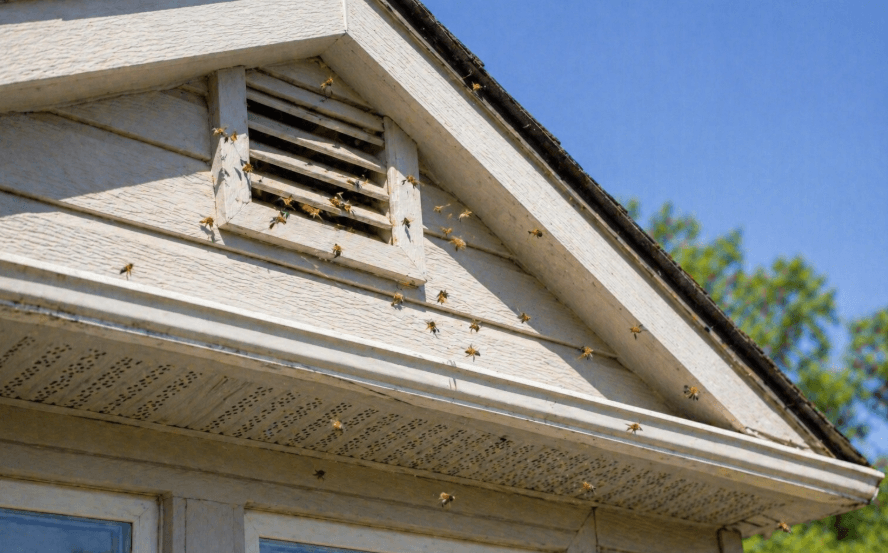
Once inside, the attic gives them exactly what they like: space, quiet, warmth, and protection from the weather.
Look for bee activity around:
- Gable vents: Bees may hover around the vent face or slip through damaged mesh.
- Soffit vents: Bees can enter along the underside of roof edges.
- Roofline gaps: Small separations between trim, siding, and roofing can become entry points.
- Damaged screens: A small tear can turn a vent into an open door.
Example: If you keep seeing bees upstairs near ceiling lights or windows, check attic vents and roof edges outside that area.
2. Wall Cracks and Exterior Gaps
Bees can enter through cracks in siding, brick, stucco, trim, or exterior joints.
These openings may look harmless, but they can lead to wall voids. That is where the problem can grow without being visible from the inside.
Watch for bees flying in and out of the same small line or hole.
Common places include:
- Cracked siding: Small splits can lead to behind panels.
- Gaps around trim: Edges near windows, doors, and corners are common.
- Brick or stucco cracks: Bees may use openings around worn mortar or damaged surfaces.
- Wall penetrations: Any hole leading into the wall can become an access point.
Example: If bees keep gathering near one section of exterior wall, the entry point may be a narrow crack you can barely see.
3. Chimneys Without Proper Covers
An uncovered chimney can be a direct path into the home.
Chimneys are dark, protected, and vertical, which makes them attractive to bees looking for shelter. If there is no cap or screen, bees can fly in and start building inside.
This can lead to activity around fireplaces, nearby walls, ceilings, or upper rooms.
Check for:
- No chimney cap: An open top gives bees easy access.
- Damaged screen: A loose or rusted screen may let bees through.
- Buzzing near the fireplace: This can point to activity inside the chimney.
- Bees near the roofline: They may be entering from above, not from the room itself.
Example: If bees appear near a fireplace but you do not see an indoor opening, the chimney should be checked from outside.
4. Dryer, Bathroom, and Stove Vents
Exterior vents can act like small doorways into your home’s structure.
Dryer vents, bathroom exhaust vents, and stove vents often connect directly to walls or ducts. If the cover is loose, broken, missing, or unscreened, bees may enter and travel inside.
You may notice bees outside the vent during the day, then find a few inside nearby rooms.
Common warning signs include:
- Bees hovering near a vent cover: This often means they are checking or using the opening.
- Loose exterior flaps: Damaged flaps may not close properly.
- Missing mesh: Open vent covers make entry easier.
- Indoor bees near bathrooms or laundry rooms: The vent may be the connection.
Example: If bees keep appearing in a bathroom, check the exterior bathroom fan vent before blaming the window.
5. Gaps Around Windows and Doors
Windows and doors are easy to check, but also easy to underestimate.
Over time, frames shift, seals wear out, screens tear, and small spaces open around edges. Bees can use these gaps, especially if they are already active outside your home.
Look closely around the outside and inside.
Check for:
- Damaged weatherstripping: Worn seals can create tiny openings.
- Loose window frames: Small gaps around frames can let bees slip through.
- Torn screens: Even small tears can allow entry.
- Door gaps: Spaces under or around doors can let bees indoors.
Example: If bees show up near the same window every afternoon, inspect the outer frame, screen, and wall around that window.
6. Gutters, Pipes, and Utility Openings
Utility openings are often overlooked because they are not obvious.
Where pipes, wires, cables, AC lines, or gutters meet the house, small gaps can form. Bees may use those openings to reach wall cavities, attic spaces, or hidden voids.
These areas are easy to miss because they are often behind shrubs, near the roof, or along utility lines.
Check around:
- Plumbing pipes: Gaps around pipe penetrations can lead into walls.
- Cable and utility lines: Small drilled holes may not be fully sealed.
- Gutter connections: Loose fascia or roof-edge gaps can create access.
- AC line openings: Gaps around exterior lines can attract insects.
Example: If bees are active near a corner of the home, look at every pipe, wire, and trim gap in that area.
Signs Bees Are Nesting Inside Your House
If bees keep appearing indoors, there may already be a hive inside the home.
At that point, the issue is usually bigger than one random bee getting through an open window or small gap.
Bees may be nesting inside a wall, attic, chimney, soffit, vent area, or another hidden space. That is why repeated bee activity in the same area should not be ignored.
Some of the most common warning signs include:
- Bees entering and exiting one spot: If bees keep flying in and out of the same crack, vent, roof edge, or small hole, that usually points to an active entry point or nesting area.
- Buzzing sounds inside walls or ceilings: A steady buzzing sound behind drywall, above ceilings, or near vents may suggest bee activity inside hidden spaces.
- Indoor bees near the same room: Repeated sightings near one window, wall, ceiling light, fireplace, or bathroom often mean the source is nearby.
- Activity around vents, chimneys, or rooflines: Bees may gather near attic vents, soffits, chimneys, or exterior gaps before entering hidden areas inside the structure.
- Stains or unusual odor: In some cases, hive material inside walls or ceilings may eventually create marks, moisture stains, or odors.
One serious mistake to avoid is sealing the hole too early.
Example: If bees are actively nesting inside, blocking the opening can trap them in the wall and push activity deeper into the house.
Simple rule: repeated bee activity in the same area usually means there is an active entry point or hidden nesting space nearby.
What to Do If Bees Are Getting Inside Your Home
Once you notice bees inside, the goal is to slow down, find the pattern, and avoid making the problem worse.
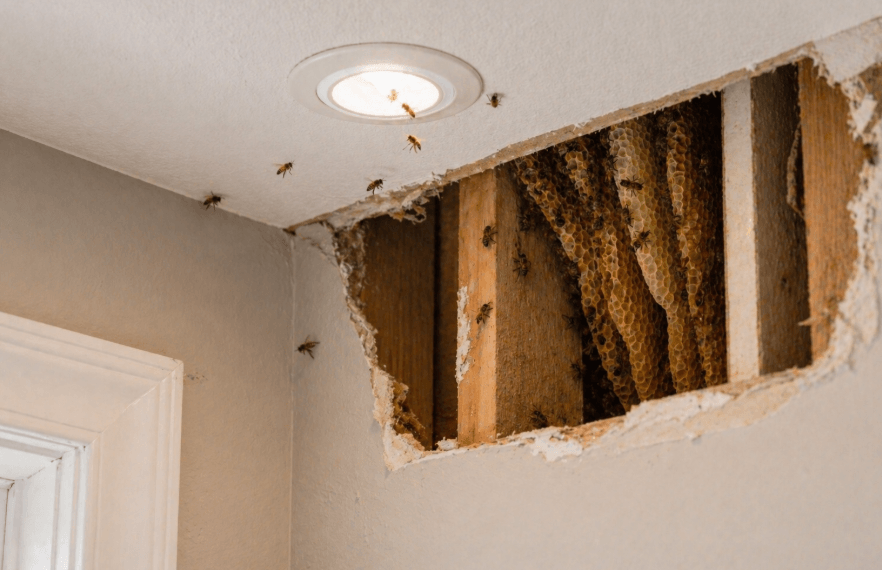
Do not start sealing every hole right away. First, figure out whether bees are still actively entering and whether there may be a hive inside.
- Identify the exact entry point: Watch where bees gather, land, or enter. Focus on vents, roof edges, siding gaps, chimneys, windows, pipes, and wall cracks.
- Check the outside wall near indoor sightings: If bees appear near a room, inspect the exterior side of that same area. The real entry point is often outside.
- Do not block active openings too early: If bees are already nesting inside, sealing the entrance can trap them and push activity deeper into walls or living spaces.
- Seal gaps after activity is handled: Once you know there is no active nesting inside, use caulk, sealant, mesh, or repair materials to close openings.
- Install screens on vents and chimneys: Fine mesh screens can block bees while still allowing airflow.
- Clean and monitor the area: After activity stops, keep checking the same spot for several days to make sure bees are not returning.
Example: If bees are entering through a dryer vent, the fix is not only killing or removing bees near the vent. You also need to repair the vent cover or add proper screening after the activity is gone.
📖 You May Also Like This “Pest Control” Article: How to Fix Termite Damage (Step-by-Step Guide)
How to Prevent Bees From Coming Back
Stopping bees once is helpful. Preventing the next entry is better.
Most prevention comes down to regular checks and small repairs before bees find the openings.
- Seal all entry points around your home: Check roof edges, siding, trim, pipe openings, and gaps around windows or doors. Small gaps can become repeat entry points.
- Add screens to vents and chimneys: Use fine mesh on attic vents, dryer vents, bathroom vents, stove vents, and chimneys so air can move but bees cannot enter.
- Fix damaged areas quickly: Loose siding, cracked trim, worn seals, damaged screens, and open vents should be repaired before bees explore them.
- Keep outdoor areas clean and less attractive: Remove sugary spills, open trash, leftover food, and sticky drink cans near the house.
- Trim plants and trees near the house: Branches touching the home can make it easier for bees to explore rooflines, vents, and wall gaps.
- Check your home regularly: Walk around your home every few weeks during warmer months and look for new gaps, cracks, or bee activity.
Example: A tiny roofline gap may not look urgent today, but sealing it early can prevent bees from turning it into an entry route later.
Frequently Asked Questions
Bees inside walls show clear signs that you can notice
Bees inside walls often create repeat activity in one area. You may see bees entering a small outside gap, hear light buzzing behind the wall, or find more bees indoors near the same room. The pattern matters more than one random bee.
Strong smells like peppermint and vinegar help repel bees
Strong smells like peppermint, vinegar, and citrus may make small areas less attractive to bees. They can help around entry points, patios, or problem spots, but they will not remove a hive inside a wall or attic.
Bee activity increases during warmer months
Bee activity usually increases in spring and early summer because bees are more active, swarms may form, and colonies look for nesting spaces. This is also when homeowners are more likely to notice bees near vents, rooflines, and exterior gaps.
Natural methods can help push bees away from your home
Natural methods can help reduce attraction when used with sealing and cleanup. Keep food and sugary spills away, close gaps, add screens, and use strong scents only as support. The main fix is still removing access points.