

You found damaged wood, soft spots, tiny holes, or hollow-sounding trim, and now you’re trying to figure out one thing:
Can this termite damage be fixed, or is it more serious than it looks?
The risky part is repairing too soon. If termites are still active, new filler or wood can get damaged again, and weak support areas may get worse.
In this guide, you’ll learn how to check the damage, when filler is enough, when wood replacement makes sense, and when to call a professional.
Key Takeaways
- Termite damage can usually be fixed, but the right repair depends on whether the wood has surface damage, deeper damage, or structural weakness.
- Always stop the termite infestation before repairing the wood, or the same damage can continue behind the surface.
- Minor termite damage can often be repaired with wood filler, sanding, and sealing when the wood is still firm and stable.
- Soft, hollow, crumbling, or sagging wood usually needs replacement or reinforcement, not simple patching.
- Structural termite damage should be handled carefully, especially when beams, joists, floors, ceilings, or load-bearing areas are affected.
- After repairs, prevent future damage by controlling moisture, removing wood-to-soil contact, sealing gaps, and checking your home regularly.
Can Termite Damage Be Fixed? (What You Need to Know First)
Yes, termite damage can be fixed in most homes.
But the repair depends on how bad the damage is.
That’s the part you need to figure out first. A few surface holes in a baseboard are not the same as a soft floor joist or weakened support beam. One can often be patched. The other may affect the strength of your home.
Think of it this way:
- Minor damage: Usually affects the surface and can often be filled, sanded, and sealed
- Moderate damage: May require cutting out and replacing damaged sections
- Severe damage: May affect structural wood and should be repaired with proper support
Example: A window trim with small holes may only need filler. But a floor joist that feels soft when pressed needs more than a cosmetic repair.
Simple rule: repair the wood based on strength, not just appearance.
📖 You May Also Like This “Pest Control” Article: How to Get Rid of Bed Bugs in a Mattress?
What to Check Before Fixing Termite Damage
Before you grab filler, paint, or replacement boards, slow down and check the condition of the wood.
This step prevents the biggest mistake: covering damage without knowing whether the termites are gone or whether the wood is still strong.
Make Sure Termites Are Gone First
- Check for active signs: Look for fresh mud tubes, live termites, new holes, fresh frass, or new dust near damaged wood. If any of these are still showing up, focus on termite treatment first. Repairing active damage only hides the problem while termites keep feeding.
Test How Weak the Wood Is
- Use simple pressure checks: Press the damaged area with a screwdriver or small tool. Tap the wood and listen for hollow sounds. If the wood crumbles, bends, or feels soft, the damage is deeper than the surface and filler will not restore strength.
Look Beyond the Visible Spot
- Inspect nearby wood too: Termites rarely damage only one perfect little area. Check baseboards, trim, floor edges, wall framing, crawl spaces, and nearby moisture zones. A small hole on the outside may connect to a larger hollow area inside.
Types of Termite Damage You Might Be Dealing With
Not all termite damage needs the same repair.
The right fix depends on whether the damage is cosmetic, moderate, or structural.
Cosmetic or Surface Termite Damage
Cosmetic damage affects the outer layer of wood.
This is the easiest type to repair because the wood underneath is usually still solid. You’re mainly fixing appearance, not restoring strength.
Common signs include:
- Small surface holes: Tiny marks or openings in trim, baseboards, or frames
- Rough or uneven wood: Light surface wear without deep softness
- Peeling outer layers: Thin wood layers lifting or flaking
- Solid feel underneath: The wood does not crumble or collapse when pressed
Example: A baseboard with a few small holes but solid backing may be patched with wood filler, sanded, sealed, and repainted.
Simple rule: surface damage can be patched only when the wood is still strong.
Moderate Termite Damage
Moderate damage goes deeper than the surface, but it may not affect major structural support.
This is where filler often becomes a weak fix.
If termites have eaten through part of the wood, filling the outside may make it look better, but the inside may still be weak.
Common signs include:
- Soft sections: The wood gives slightly when pressed
- Hollow sound: Tapping reveals empty or weak areas inside
- Crumbling edges: Damaged sections break away easily
- Damage in one section: The problem is deeper but still limited to a specific piece
Example: A door frame with one badly damaged lower section may need that section cut out and replaced, not just patched.
Simple rule: when the wood has lost strength, replace the damaged section.
Structural Termite Damage
Structural damage is the serious category.
This affects wood that helps carry weight or support the home. That can include beams, joists, subfloors, wall framing, posts, and load-bearing areas.
Watch for signs like:
- Sagging floors or ceilings: This can point to weakened support underneath
- Soft beams or joists: Structural wood should not feel weak or hollow
- Cracks around doors or windows: Movement can happen when framing loses strength
- Doors or windows sticking: Shifting wood can affect alignment
- Widespread damage: Damage across several areas may mean a larger issue
Example: A damaged support beam should not be patched with filler. It needs proper reinforcement or replacement so the structure stays safe.
Simple rule: structural damage is not a cosmetic repair.
How to Fix Termite Damage
Once termites are gone and you know how bad the damage is, you can choose the right repair.
Don’t start with the material. Start with the severity.
Step 1: Stop the Termite Infestation
Before fixing anything, make sure the termites are no longer active.
This matters because fresh repairs can be damaged again if the colony is still feeding nearby.
Check for:
- Fresh mud tubes: Especially along walls, foundation areas, crawl spaces, or baseboards
- Live termites: Any active insects mean treatment comes before repair
- New holes or dust: Fresh signs mean the damage may still be spreading
- Repeated soft spots: More weak areas appearing over time can mean ongoing activity
Example: If you patch a baseboard today but new dust appears next week, you did not fix the real problem. You only covered one symptom.
Simple rule: treat termites first, repair wood second.
Step 2: Assess the Severity of the Damage
Now check how deep the damage goes.
This helps you avoid using filler where replacement is needed, or replacing wood that only needed a small patch.
Use these checks:
- Press test: Push gently with a screwdriver to see whether the wood stays firm
- Tap test: Hollow sounds can mean internal damage
- Visual check: Look for cracks, sagging, holes, peeling, or crumbling
- Nearby inspection: Check surrounding trim, floors, walls, and framing
Example: If the surface has small holes but the wood feels firm, it may be minor. If it breaks apart or sinks when pressed, the damage is deeper.
Simple rule: firm wood can often be repaired, weak wood usually needs replacement.
Step 3: Fill Minor Termite Damage With Wood Filler
Small holes and surface damage can often be fixed with wood filler.
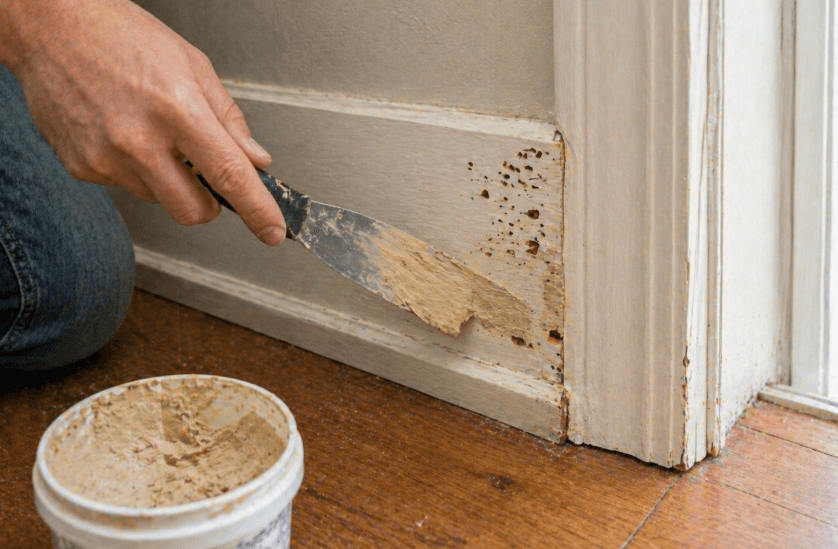
This works best for trim, baseboards, door frames, window frames, and other non-structural areas where the wood is still solid.
- Clean the area first: Remove dust, loose wood, paint flakes, and debris so the filler bonds properly.
- Apply wood filler: Press filler into holes, grooves, and shallow damaged spots.
- Let it cure fully: Do not sand or paint too early, because soft filler can pull out.
- Sand smooth: Blend the patched area with the surrounding wood.
- Seal and paint: Protect the repaired area from moisture and future wear.
Example: A small damaged trim corner can often look normal again after filling, sanding, priming, and painting.
Simple rule: use filler only when the wood still has strength.
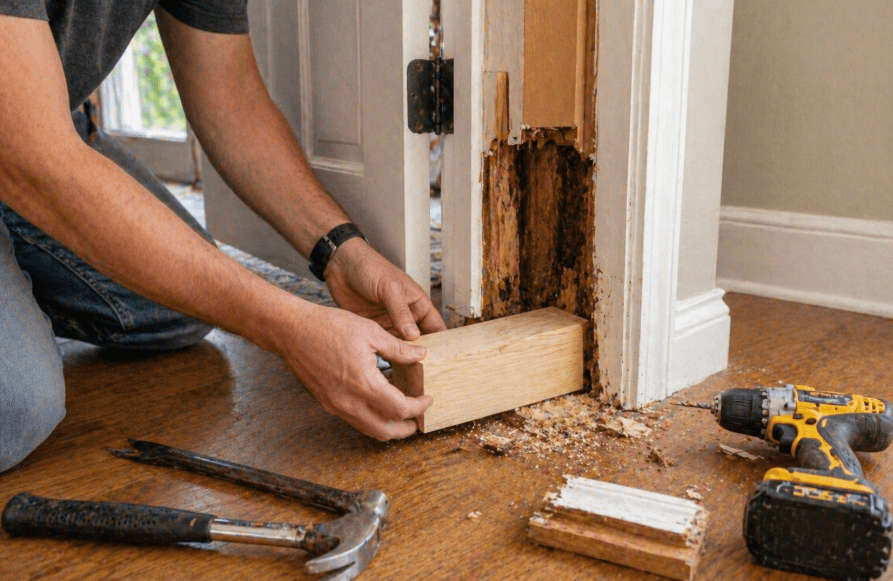
Step 4: Replace Damaged Wood Sections
If the wood is soft, hollow, or crumbling, replacement is usually the better fix.
This restores strength where filler would only hide the problem.
- Mark the damaged section: Identify the full weak area, not just the visible hole.
- Cut out bad wood: Remove the damaged portion cleanly without disturbing stronger surrounding wood.
- Fit new wood: Use a matching piece that fits tightly into the repaired area.
- Secure it properly: Fasten the new wood with the right screws, nails, or adhesive based on the location.
- Seal all edges: Seal gaps and joints to reduce moisture and future termite access.
Example: If the lower part of a door frame is eaten through, cutting out that section and replacing it is stronger than packing filler into weak wood.
Simple rule: replace wood when the damaged area no longer supports itself.
Step 5: Reinforce Structural Damage Safely
Structural termite damage needs careful repair because it affects safety.
This is where DIY can become risky.
Areas that need extra caution include:
- Support beams: These carry weight and should not be patched casually
- Floor joists: Weak joists can affect floors and movement
- Load-bearing walls: These support the home’s structure
- Subfloors: Damage here can create soft or unstable flooring
- Crawl space framing: Hidden damage can spread before you notice it
Example: If a beam feels hollow or soft, filling the outside will not restore its strength. The wood may need sistering, reinforcement, or replacement.
Simple rule: when damaged wood supports weight, get proper help before repairing.
📖 You May Also Like This “Pest Control” Article: How Are Bees Getting in My House? (6 Common Entry Points)
When Should You Call a Professional for Termite Damage?
Some repairs are safe to handle yourself. Others are not worth guessing on.
Call a professional when the damage affects safety, spreads across multiple areas, or you cannot tell how deep it goes.
You should get help if:
- Structural parts are damaged: Beams, joists, subfloors, and load-bearing walls need proper repair.
- Wood feels soft or hollow: This often means the inside is weaker than the outside looks.
- Damage appears in several areas: Multiple spots can point to a larger hidden problem.
- Floors sag or feel uneven: That may mean support wood has been weakened.
- You still see termite activity: Repairs should wait until the infestation is controlled.
- You are unsure what you’re looking at: Guessing can lead to weak repairs and higher costs later.
Example: Patching a support beam may make it look better, but it does not make it safe. That kind of repair needs proper evaluation.
Simple rule: call a professional when strength, safety, or active termites are involved.
How to Prevent Termite Damage After Repairs
Fixing the damage is only half the job.
The other half is making sure termites do not come back to the same conditions that attracted them in the first place.
Focus on moisture, wood access, gaps, and regular checks.
Keep Moisture Away From Your Home
- Fix moisture problems early: Repair leaking pipes, clean gutters, extend downspouts, and keep water from pooling near the foundation. Termites are drawn to damp wood and soil, so drying out problem areas makes your home less attractive after repairs.
Remove Wood Contact With Soil
- Break the easy termite path: Store firewood away from the house, keep wood structures raised off soil, and avoid piling mulch directly against the foundation. Wood touching soil gives termites a direct route into your home.
Seal Gaps and Entry Points
- Close hidden access points: Seal foundation cracks, gaps around pipes, utility openings, vents, and crawl space openings. Termites can use small spaces to enter quietly, so closing gaps helps reduce future access.
Check Repaired Areas Regularly
- Watch the same spots again: Recheck repaired wood, nearby trim, crawl spaces, and moisture-prone areas every few months. Look for fresh mud tubes, new holes, soft spots, or dust. Early signs are much easier to fix than advanced damage.
Frequently Asked Questions
What Kills Termites Instantly?
Direct contact sprays or chemicals can kill visible termites quickly. The problem is they usually do not reach the hidden colony. So the termites you see may die, while the main infestation continues inside wood, walls, or soil.
How Do You Get Rid of Termites Overnight?
You usually cannot get rid of a full-termite colony overnight. You may reduce visible activity quickly, but full control takes time because treatment must reach hidden termites and the colony source.
What Time of Year Are Termites Most Active?
Termites are often most active during warmer months, especially spring and early summer when swarmers may appear. However, termites can stay active longer in warm, damp, or protected areas.
What Are the First Signs of Termites?
Early signs include mud tubes, small holes in wood, hollow-sounding wood, tiny piles of frass or dust, discarded wings, and soft spots near trim, floors, windows, or door frames.
How Many Days Does a Termite Swarm Last?
A termite swarm may last from a few hours to a couple of days. Even if it stops quickly, it can still mean there is an active colony nearby that needs inspection.