

Your pool looked clean a few days ago, but now the water is green, cloudy, or slippery. So the first question is: how to get rid of algae in your pool before it spreads more?
You may be brushing, adding chlorine, and running the filter, but the algae keeps coming back. The truth is, algae grows fast when chlorine drops, circulation gets weak, warm water sits too long, or debris feeds the problem.
In this guide, you’ll learn what causes pool algae, how to remove it step by step, and how to keep it from coming back.
Key Takeaways
- Pool algae grows fast when chlorine drops, circulation weakens, or debris sits in the water, especially during warm weather or after rain.
- Green, mustard/yellow, and black algae look and behave differently, so the right treatment depends on the type of algae in your pool.
- The best algae removal process is brush, clean debris, balance water, shock, filter, vacuum, and repeat if needed. Skipping steps can make algae return.
- Brushing is a must because algae sticks to walls, steps, corners, floors, ladders, and edges, and chlorine works better after algae is loosened.
- Dead algae will not disappear on its own. You still need to vacuum, filter, and clean or backwash the filter to fully clear the pool water.
- Long-term prevention comes down to steady chlorine, balanced pH, daily water movement, regular brushing, quick debris removal, and clean filters.
What Does Mustard or Algae in a Pool Look Like?
Algae doesn’t always look the same, and that’s where people get confused.
Most pools turn green and cloudy first. That’s the common type. The water loses clarity, and surfaces start feeling slippery. If you run your hand along the wall, it won’t feel clean anymore.
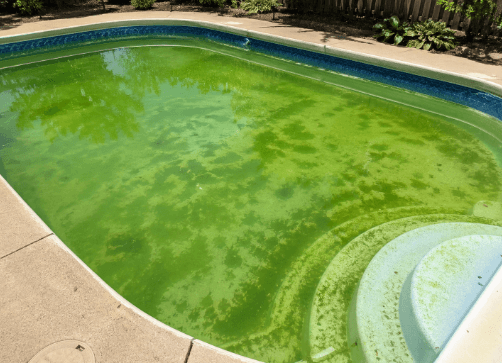
Mustard or yellow algae looks different. It shows up as yellowish or brown dust-like patches, usually on the shady side of the pool, steps, or corners. It often looks like dirt, but keeps coming back after brushing.
Black algae is the toughest one. It appears as small dark spots stuck to the surface, almost like stains. You can’t just brush it away easily.
Simple way to tell:
- Green = floating in water
- Yellow/mustard = powdery and returns quickly
- Black = stuck and stubborn
Once you know what you’re dealing with, fixing it becomes much easier.
Is It Safe to Swim in a Pool With Algae?
Short answer: not a good idea.
Algae itself isn’t always the main problem. The bigger issue is what it signals. If algae is growing, it usually means your chlorine isn’t doing its job. That opens the door for bacteria and other contaminants.
Swimming in that water can lead to:
- Skin irritation
- Eye redness
- Ear infections
- In some cases, stomach issues
Green algae might look harmless, but it still means the water isn’t clean. Black algae is even worse because it protects bacteria inside it.
Also, algae makes surfaces slippery, which increases the risk of slipping, especially on steps and ladders.
If your pool has visible algae, it’s better to fix it first, then swim once the water is clear and balanced again.
📖 You May Also Like This “Swimming Pool” Article: How to Maintain an Above-Ground Pool?
What Causes Algae in a Pool?
Algae grows when your pool water loses balance.
Most of the time, it starts with low chlorine, poor circulation, warm weather, or debris sitting in the water. Once the pool gives algae the right conditions, it can spread fast across the walls, floor, corners, steps, and even inside the filter.
The most common causes are:
- Low chlorine: When chlorine drops, algae can grow quickly.
- Poor circulation: Weak water movement creates dead spots where algae can settle.
- Unbalanced pH: If pH is too high or too low, chlorine may not work properly.
- Warm water: Heat helps algae spread faster, especially in summer.
- Rainwater and debris: Leaves, dirt, and rain can bring in nutrients that feed algae.
- Dirty or clogged filter: If the filter is not working well, dead algae and debris stay in the pool.
Example: If your pool turns green after heavy rain or a hot week, the water may have lost chlorine strength and stopped circulating properly.Simple rule: algae grows when chlorine is weak, water is not moving well, or the pool is not cleaned and balanced regularly.
How to Get Rid of Algae in a Pool
Alright, let’s fix the actual problem. When algae shows up, random treatments won’t help. You need a clear order. Skip steps, and it comes right back.
Here’s what actually works:
Step 1: Brush everything- Start with walls, steps, corners, and the pool floor. This breaks algae loose so chlorine can actually kill it.
Step 2: Clean out debris- Leaves, dirt, and bugs feed algae. Remove anything sitting in the pool.
Step 3: Test and balance water- Check pH and chlorine. Aim for balanced levels before adding anything heavy.
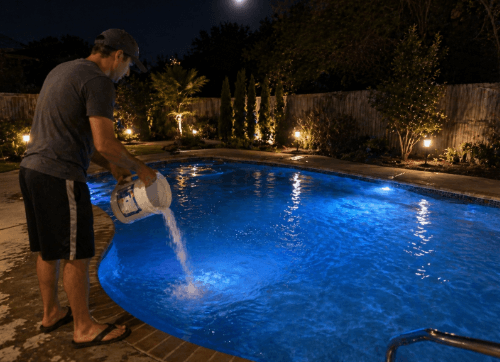
Step 4: Shock the pool- This is the main kill step. Add a strong chlorine dose (shock) at night so sunlight doesn’t weaken it.
Step 5: Run the filter non-stop- Keep water moving for at least 24–48 hours. Algae dies, but the filter removes it.
Step 6: Vacuum and backwash- Once algae settles, vacuum it out. Clean or backwash your filter to prevent it from coming back.
Step 7: Repeat if needed- Stubborn algae, especially mustard or black, may need a second round.
The goal is simple: break it, kill it, remove it, and filter it out.
How to Remove Algae From Pool Walls and the Bottom
Algae sticks to pool surfaces, so brushing is the first step.
Focus on the areas where algae settle most:
- Walls
- Steps
- Corners
- Pool floor
- Ladders and edges
Use a stiff pool brush and scrub slowly so the algae breaks loose. After brushing, vacuum the loosened algae or let the filter help remove it from the water.
Simple rule: brush the algae loose first, then remove it from the pool.
How to Get Rid of Pool Algae Quickly
Fast algae removal depends on acting in the right order.
Brush the pool first, then shock it at night, and keep the filter running until the water starts clearing.
For quicker results:
- Brush all visible algae
- Shock the pool after sunset
- Run the filter for 24–48 hours
- Vacuum dead algae after it settles
Simple rule: the faster you brush, shock, and filter, the faster the pool clears.
How to Get Rid of Pool Algae Without Chemicals
You can reduce algae without chemicals, but it usually takes more time.
This works best for light algae, not a heavy green pool.
Focus on:
- Daily brushing
- Removing leaves and debris
- Running the pump longer
- Improving circulation
- Cleaning the filter often
This may help slow algae down, but if the pool is already green or cloudy, chemical treatment is usually needed.
Simple rule: no-chemical methods help with light algae, but heavy algae usually needs stronger treatment.
How to Get Rid of Algae in an Above-Ground or Saltwater Pool
The basic algae treatment is the same, but these pools need closer attention.
Above-ground pools often have weaker circulation, so algae can collect faster in corners and lower-flow areas. Saltwater pools can still grow algae if the system is not producing enough chlorine.
Check these first:
- Pump run time
- Filter condition
- Salt system output
- Chlorine level
- Corners, seams, and steps
Brush more often, clean the filter, and make sure the system is producing enough chlorine before algae spreads again.
Simple rule: above-ground and saltwater pools still need strong circulation, clean filters, and steady chlorine.
What to Do If You Can’t Get Rid of Pool Algae
If algae keep coming back, the problem isn’t fully solved yet.
- Check and rebalance your chlorine and pH levels
- Clean or replace the pool filter if it’s clogged
- Shock the pool again with the correct dosage
- Inspect hidden areas where algae might still be growing
How to Get Rid of Green Algae in a Pool
Green algae is the most common and the easiest to fix if you act quickly.
It usually shows up when chlorine levels drop or after rain, heat, or poor circulation. That’s why your pool suddenly turns green even if it looked fine before.
Here’s how to fix it:
- Brush the entire pool to break up algae on the walls and floor
- Add a strong dose of pool shock (chlorine) at night
- Run the filter continuously for 24–48 hours
- Vacuum dead algae once it settles at the bottom
- Re-test and maintain proper chlorine and pH levels
Green algae spreads fast, but it also clears fast if you follow the full process without skipping steps.
📖 You May Also Like This “Swimming Pool” Article: What Does Alkalinity Do in a Pool? How to Balance It?
How to Get Rid of Black Algae in a Pool
Black algae is stubborn because it roots deep into surfaces.
It shows up as dark, spot-like patches that don’t brush off easily. Regular chlorine won’t fully kill it unless you break its outer layer first.
Here’s what works:
- Use a stiff or steel brush to scrub affected spots aggressively
- Apply chlorine directly to the algae (spot treatment)
- Shock the pool with a high chlorine dose
- Keep the filter running continuously
- Repeat brushing daily until spots disappear
Black algae protects itself, so physical scrubbing + strong chlorine is the only way to fully remove it.
How to Remove Dead Algae From a Pool
Once algae is killed, it doesn’t just disappear. It turns into fine debris that clouds the water and settles at the bottom.
If you skip this step, your pool will still look dirty.
Here’s how to clear it:
- Let the dead algae settle on the pool floor
- Use a pool vacuum to remove it slowly
- Run the filter system continuously
- Backwash or clean the filter to prevent buildup
- Repeat vacuuming if the water still looks cloudy
Killing algae is step one. Removing dead algae is what actually clears your pool.
How to Remove Algae Without a Vacuum
No vacuum? You can still remove algae, just a bit slower.
- Use a fine mesh net to scoop visible debris
- Brush algae toward the main drain if available
- Run the filter continuously to catch particles
- Clean the filter more often to avoid clogging
It works, but expect slower results compared to using a vacuum.
How to Remove Algae Stains From a Pool
Sometimes algae leaves behind stains even after it’s gone.
- Identify if it’s an organic stain (algae) or something else
- Brush the area with a stiff pool brush
- Apply a chlorine puck directly on the stain
- For stubborn spots, use a stain remover or shock treatment
If the stain lightens with chlorine, it was algae. Keep treating until it fades completely.
How to Use Algaecide in a Pool
Algaecide helps control algae, but here’s the truth: it works best as a support tool, not the main fix.
If you add it without cleaning or shocking first, it won’t solve the problem.
Here’s how to use it the right way:
- Start by balancing your pool water (pH and chlorine)
- Add algaecide after shocking the pool, not before
- Pour it evenly around the pool while the pump is running
- Run the filter for several hours to circulate it properly
- Follow the exact dosage based on your pool size (gallons)
Most algaecides start working within 24 hours, but results depend on how bad the algae problem is.
For maintenance:
- Use a weekly dose to prevent algae growth
- Add extra after heavy rain or high usage
- Use a closing dose when preparing your pool for winter
Always check the label. Too little won’t work, too much causes problems.
Can You Put Too Much Algaecide in a Pool?
Yes, and it can create new problems instead of fixing algae.
- Excess algaecide can cause foamy water on the surface
- It may lead to cloudy water or poor filtration
- Too much can reduce the overall water balance and clarity
- Always measure based on your pool size and instructions
More isn’t better here. Stick to the recommended amount.
Can You Swim After Putting Algaecide in a Pool?
Not immediately. You need to give it time to circulate and settle.
- Wait at least 15–30 minutes after adding algaecide
- Keep the pump running during this time
- Make sure the water is clear and balanced before swimming
- If heavily treated, wait longer as per product instructions
When in doubt, wait a bit longer. It’s better than jumping in too early.
How to Get Rid of Algaecide Foam in a Pool
Foam usually happens when too much algaecide is added or water is unbalanced.
- Run the filter continuously to break down foam
- Check and rebalance pH and chlorine levels
- Avoid adding more chemicals until the foam reduces
- Use a defoamer product if the foam doesn’t clear
Foam isn’t dangerous, but it’s a sign that something needs adjusting.
How to Prevent Algae in a Pool
Getting rid of algae is one thing. Keeping it from coming back is what really matters.
Most pools get algae again because the basics slip over time. A small drop in chlorine or poor circulation is enough to restart the problem.
Here’s how to keep your pool clean consistently:
- Maintain proper chlorine levels at all times
- Keep your pH balanced so chlorine works effectively
- Run the pump daily to avoid stagnant water
- Brush walls and steps at least once a week
- Remove leaves and debris quickly before they break down
- Clean or backwash the filter regularly
- Use a weekly maintenance dose of algaecide
Prevention is simple: keep water moving, keep it clean, and keep it balanced.
Does Copper Prevent Algae Growth in a Pool?
Copper can help control algae, but it’s not a complete solution on its own.
- Copper ions can slow down algae growth in water
- It’s often used in mineral systems or algaecide products
- Too much copper can cause stains on pool surfaces
- It doesn’t replace the need for chlorine and proper balance
Think of copper as a helper, not the main defense against algae.
Frequently Asked Questions
Does Chlorine Kill Algae in a Pool?
Yes, chlorine is the main thing that kills algae. But it needs to be at the right level. Low chlorine won’t work. That’s why pools are usually shocked to raise chlorine high enough to kill algae completely.
Does Shocking a Pool Kill Algae?
Yes, shocking is one of the most effective ways to kill algae. It adds a high dose of chlorine that destroys algae quickly. Just remember, shocking works best when you also brush and run the filter.
Does Bleach Kill Algae in a Pool?
Regular household bleach can kill algae because it contains chlorine. But it’s not always ideal for pools. Pool-specific chemicals are more controlled and safer for water balance and equipment.
Does Salt Kill Algae in a Pool?
No, salt itself doesn’t kill algae. In saltwater pools, salt is used to generate chlorine, and that chlorine is what kills algae. If chlorine levels drop, algae can still grow.
Should I Drain My Pool to Get Rid of Algae?
In most cases, no. Draining isn’t necessary and can even damage your pool. Algae can usually be removed with brushing, shocking, and filtration. Draining is only a last resort for severe cases.
How to Clean Algae From a Pool Screen Enclosure
Use a soft brush or cloth with a mild cleaning solution. Gently scrub the screen to remove algae buildup. Rinse with water afterward. Avoid harsh chemicals that can damage the screen material.
How to Get Rid of Brown Algae in a Pool
Brown algae is often similar to mustard algae. Treat it by brushing thoroughly, then using a strong chlorine shock. Run the filter continuously and repeat the process if it comes back.
How to Get Rid of Pink Algae in a Pool
Pink algae is actually a type of bacteria. It shows up as slimy pink patches. Scrub the affected areas and use a sanitizer or shock treatment to kill it. Keep chlorine levels consistent to prevent return.
How to Get Rid of White Algae in a Pool
White algae usually looks like cloudy flakes or film. Brush and vacuum the pool, then shock it to kill remaining particles. Make sure your filter is clean, since white algae can clog it quickly.