

Your above-ground pool looked easy to manage at first, and now the water turns cloudy, debris piles up, and you keep asking how to maintain an above-ground pool without constant work.
That’s where most pool owners get frustrated. A small drop in chlorine, weak circulation, or a missed cleaning day can throw things off fast.
The good news is that pool care gets much easier once you follow the right routine. In this guide, you’ll learn what to check, what to clean, and how to keep the water clear longer.
Key Takeaways
- Above-ground pools can turn cloudy fast because they hold less water, so small issues with chlorine, circulation, or cleaning show up quickly.
- The core maintenance routine is simple: test, circulate, clean, and filter. Skipping one part can lead to cloudy water, debris buildup, or algae growth.
- Chlorine, pH, and alkalinity control water clarity and safety, while proper circulation helps chemicals spread evenly through the pool.
- Physical cleaning matters as much as chemicals. Skimming, brushing, vacuuming, and cleaning the filter help prevent buildup before it turns into a bigger problem.
- Most above-ground pool problems come from inconsistency, not complicated maintenance. Testing weekly, running the pump daily, and fixing small issues early keep care easier.
- Saltwater, chlorine, Intex, and small above-ground pools all need steady monitoring because smaller systems can lose balance faster.
What Maintenance Does an Above-Ground Pool Need?
Above-ground pools don’t need complicated care, but they do need consistent basics. If you skip even one part, problems show up fast because the water volume is smaller.
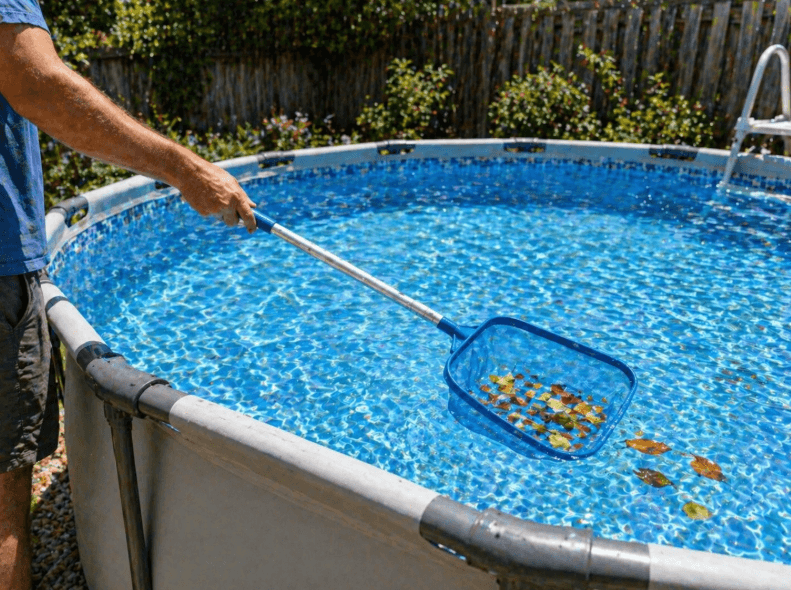
Here’s what regular maintenance looks like:
- Test and balance chlorine, pH, and alkalinity every week
- Run the pump daily to keep water moving
- Clean out leaves, dirt, and debris before they break down
- Brush walls and floor to prevent buildup
- Clean or backwash the filter regularly
It’s not a lot of work. It’s just about doing these few things consistently.
What Do You Need to Maintain an Above-Ground Pool?
You don’t need a long list of tools. Just a few essentials that you’ll use regularly.
Here’s what actually matters:
- A water test kit or strips to check levels
- Basic pool chemicals like chlorine and pH adjusters
- A pool skimmer net for removing debris
- A brush for walls and floor cleaning
- A pool vacuum for deeper cleaning
- A working pump and filter system
Think of it as a small setup. Once you have these, maintenance becomes routine instead of guesswork.
📖 You May Also Like This “Swimming Pool” Article: How To Get Rid of Algae In Your Pool
How Hard Is It to Maintain an Above-Ground Pool?
Maintaining an above-ground pool is not hard, but it does need a steady routine.
The water can change fast because the pool holds less water than an in-ground pool. If you skip testing, cleaning, or pump time for a few days, the water may turn cloudy, or algae may start growing.
The hard part is not the work itself. It is staying consistent.
- Test the water weekly
- Run the pump daily
- Skim and brush regularly
- Clean the filter when needed
- Fix small problems early
Simple rule: above-ground pool maintenance stays easy when you handle small tasks before they turn into bigger problems..
How Much Does It Cost to Maintain an Above-Ground Pool?
Costs are lower than in-ground pools, but there are still ongoing expenses.
Here’s a simple breakdown:
- Chemicals (chlorine, pH control): monthly cost
- Electricity for running the pump daily
- Filter cleaning or replacement over time
- Occasional tools or accessories if needed
On average:
- Monthly cost: around $20–$60, depending on usage
- Higher costs come from neglect, not routine care
Keep it maintained, and costs stay predictable and low.
How to Maintain an Above-Ground Pool
This is where most people either keep their pool clear… or keep fighting problems all season. The difference is a simple routine. Not more work, just the right steps done regularly.
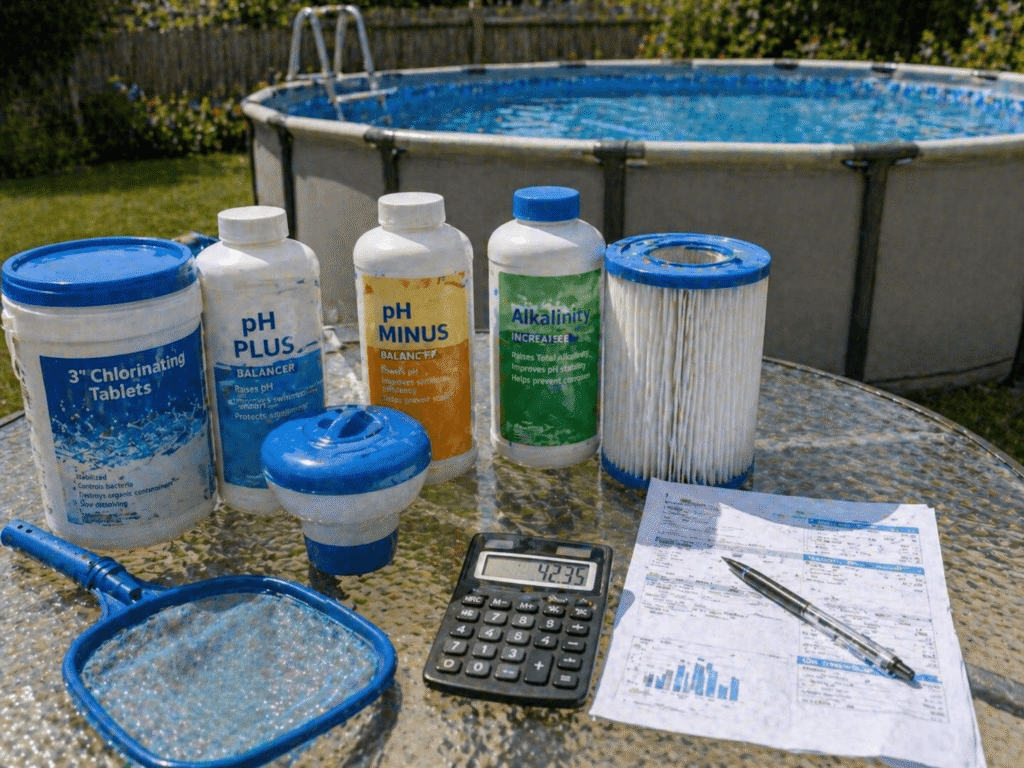
- Test water levels weekly (chlorine, pH, alkalinity)
- Run the pump 8–12 hours daily to keep water moving
- Skim debris before it sinks and causes buildup
- Brush the walls and floor to stop algae from forming
- Vacuum the pool to remove dirt and dead particles
- Clean or backwash the filter system regularly
You don’t need to do everything daily. Just stay consistent, and the pool stays stable.
How to Maintain Above-Ground Pool Water and Chemicals
Above-ground pools can change fast because they hold less water. A small drop in chlorine, a pH swing, or weak circulation can make the water turn cloudy within days.
Focus on the main levels first:
- Chlorine: Keeps the water sanitized and helps prevent algae.
- pH: Helps chlorine work properly. If pH is too high or too low, the water can become cloudy or uncomfortable.
- Alkalinity: Helps keep pH stable so the water does not swing too quickly.
- Circulation: Keeps water moving so chemicals spread evenly and algae has less chance to grow.
- Filter condition: A dirty filter makes it harder to keep the water clean, even if chemicals are balanced.
Test the water regularly with test strips or a test kit, then make small adjustments as needed. Don’t add too much chemical at once. Add slowly, let the water circulate, then test again.
Example: If the water looks dull but chlorine is low, don’t wait until it turns green. Adjust the chlorine, run the pump, and clean the filter before the problem grows.
Simple rule: keep chlorine steady, pH balanced, water moving, and the filter clean.
How to Keep an Above-Ground Pool Clean
Clean water isn’t just about chemicals. Physical cleaning matters just as much.
- Skim the surface daily to remove leaves and debris
- Brush walls and steps to prevent buildup and algae
- Vacuum the pool to clear settled dirt
- Clean the filter system so it can work properly
- Keep the area around the pool clean to reduce contamination
A clean pool stays balanced longer and needs fewer fixes.
📖 You May Also Like This “Swimming Pool” Article: What Does Alkalinity Do in a Pool? How to Balance It?
How to Maintain an Above-Ground Saltwater Pool
An above-ground saltwater pool still needs regular checking, even though the system makes chlorine for you.
The main thing is to make sure the salt system is actually producing enough chlorine. If the salt level drops, the cell gets dirty, or the pump does not run long enough, the water can turn cloudy fast.
Focus on these:
- Check salt levels weekly
- Monitor chlorine output
- Keep pH balanced
- Clean the salt cell when buildup appears
- Run the pump daily
- Brush and remove debris before algae starts
Simple rule: saltwater pools are easier day to day, but the salt system still needs steady care.
How to Maintain an Above-Ground Chlorine Pool
An above-ground chlorine pool is simple to maintain when chlorine stays steady.
The mistake is waiting until the water looks cloudy before adding chlorine. By then, the pool may already be out of balance.
Focus on these:
- Test chlorine regularly
- Keep pH and alkalinity balanced
- Add chlorine in small, steady amounts
- Run the filter daily
- Brush and vacuum before the buildup spreads
If chlorine drops too low, algae can start to grow quickly because above-ground pools have less water volume.
Simple rule: chlorine pools stay clear when sanitizer stays stable, not when you only treat problems after they appear.
How to Maintain an Intex Above-Ground Pool
Intex pools are easy to use, but the smaller pump and filter system means the water can change quickly.
That’s why small problems need quick attention.
Focus on these:
- Run the pump every day
- Check the water balance more often
- Clean or replace the filter cartridge regularly
- Remove leaves and dirt before they settle
- Watch for cloudy water early
- Adjust chemicals in small amounts
A small Intex pool can stay clear with simple care, but it needs consistency because there is less room for error.
Simple rule: Intex pools are easy to manage when you test often, run the pump daily, and clean the filter before problems build up.
Frequently Asked Questions
How to Maintain an Above-Ground Pool in Winter
Start by cleaning the pool completely and balancing the water before closing it. Lower the water level, remove debris, and add a winterizing chemical kit. Cover the pool tightly to keep out dirt and snow. Check occasionally to make sure the cover stays secure.
How to Maintain an Above-Ground Pool Without a Pump
Without a pump, maintenance becomes more manual. You’ll need to stir the water regularly, skim debris daily, and brush surfaces to prevent buildup. Keep chemicals balanced since there’s no circulation system. It works, but requires more effort and frequent cleaning.
How to Maintain a Small Above-Ground Pool
Small pools are easier but less stable. Water balance changes quickly, so test more often. Add chemicals in small, controlled amounts and clean debris right away. Run the pump daily if available. Staying consistent keeps a small pool clear with minimal effort.